




Introduction: The Rise of Immersive Tech in Learning
Technology in education has evolved dramatically, with Virtual Reality (VR) and Augmented Reality (AR) leading the charge. These immersive tools are transforming traditional classrooms into interactive, engaging environments.
By blending digital elements with real-world experiences, VR and AR enhance comprehension, retention, and student motivation. As technology in education advances, educators are discovering innovative ways to leverage these tools for more effective learning.
Understanding VR and AR in Education
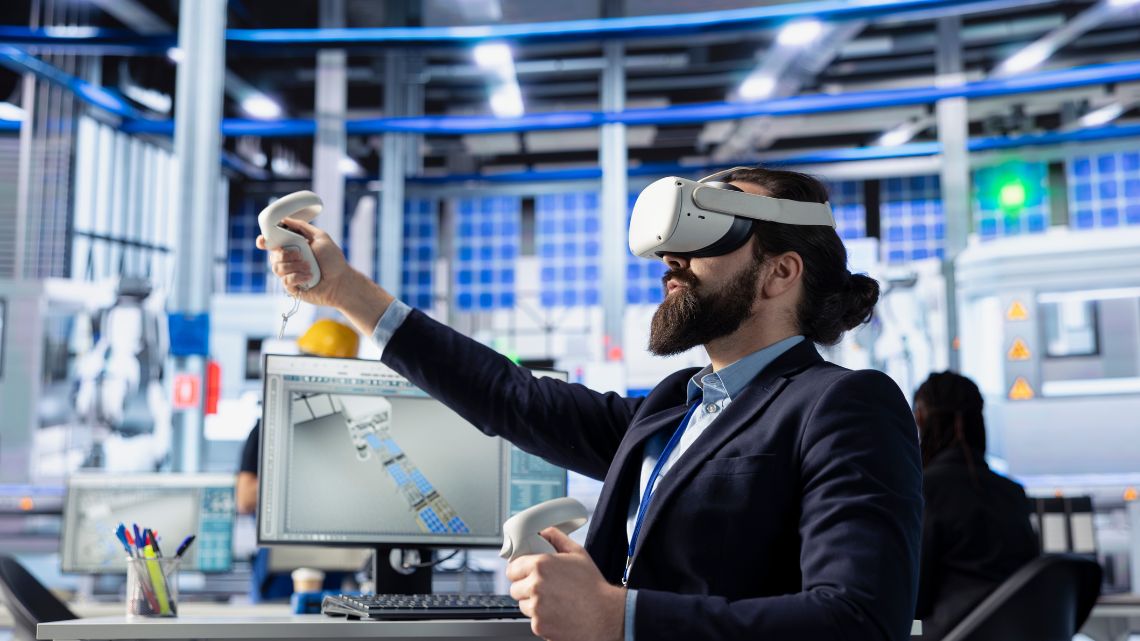
VR creates a fully simulated environment, while AR overlays digital content onto the real world. In education, VR can transport students to ancient civilizations or inside the human body, whereas AR can bring textbook diagrams to life. Both technologies provide experiential learning, making abstract concepts tangible. Unlike passive learning methods, VR and AR encourage active participation, aligning perfectly with modern technology in education trends.
Immersive Learning Experiences
One of the most exciting applications of VR and AR is in creating immersive learning experiences. For instance, virtual science labs allow students to conduct experiments without physical equipment, reducing costs and safety risks. AR-enhanced textbooks enable 3D visualizations of complex topics, such as molecular structures or historical events. These tools cater to different learning styles, ensuring that visual, auditory, and kinesthetic learners all benefit from technology in education.
Applications Across Subjects
VR and AR are versatile, enhancing learning in multiple disciplines:
- History: Students can “walk” through ancient Rome or witness pivotal historical moments.
- Geography: Interactive AR maps help learners explore terrains and ecosystems.
- Engineering: VR simulations allow students to design and test structures in a risk-free environment.
- Art: AR apps let users visualize famous paintings in 3D or even create digital art.
This adaptability makes VR and AR invaluable in modern technology in education strategies.
Benefits of Immersive Technology in Education
The advantages of VR and AR in education are significant:
- Increased Engagement: Interactive lessons capture students’ attention better than traditional methods.
- Improved Retention: Hands-on experiences lead to deeper understanding and memory retention.
- Accessibility: Students with disabilities can benefit from customized, immersive learning tools.
- Collaboration: Multi-user VR environments enable teamwork, even in remote settings.
By integrating these tools, educators can create more inclusive and effective learning experiences.
Challenges and Limitations
Despite their potential, VR and AR face several hurdles:
- High Costs: VR headsets and AR devices can be expensive for schools.
- Content Development: Creating high-quality educational VR/AR content requires expertise.
- Technical Infrastructure: Schools need robust internet and hardware to support these technologies.
Addressing these challenges is crucial for widespread adoption of technology in education.
Conclusion: The Future of VR and AR in Education
VR and AR hold immense promise for revolutionizing technology in education. While challenges like cost and infrastructure remain, their ability to enhance engagement, retention, and accessibility makes them indispensable tools. As technology becomes more affordable and accessible, immersive learning could soon become a standard in classrooms worldwide. The key lies in developing scalable solutions to ensure all students benefit from these advancements.